Strength Training & the Menstrual Cycle

How to Train Optimally in Every Phase of Your Cycle

Strength Training & the Menstrual Cycle

How to Train Optimally in Every Phase of Your Cycle

Many women notice it instinctively: one week you feel strong, energetic and motivated — the next week training suddenly feels harder, focus drops and your body asks for more rest.
That’s not weakness. That’s physiology.

Your menstrual cycle directly affects your energy levels, strength, recovery and training response. By working with your cycle instead of against it, you don’t train harder — you train smarter.

At Aurora Personal Training in Eindhoven, we guide women who want their training to align with their body, not fight it. In this article, you’ll learn how to optimize strength training and nutrition in every phase of your cycle.

👉 Looking for personal guidance?
Personal Training for Women in Eindhoven


The 4 Phases of the Menstrual Cycle & Strength Training

An average menstrual cycle lasts about 28 days (21–35 days is normal) and consists of four phases. Each phase requires a different approach to training and recovery.


Phase 1 – Menstrual Phase (Winter | Days 1–5)

Recovery, softness and technique

During menstruation, estrogen and progesterone are low. Your body is focused on recovery, and blood loss may cause fatigue, cramps and a heavy feeling.

Training focus

  • Light strength training

  • Mobility and technique

  • Walking, yoga or gentle movement

At Aurora, we often use this phase to:

  • refine technique

  • improve mobility

  • calm the nervous system

👉 Pairs well with:
Mobility & Injury Prevention in Strength Training

Nutrition focus

  • Iron-rich foods (red meat, lentils, beans, spinach)

  • Warm, nourishing meals

  • Adequate hydration

👉 Read also:
Nutrition & Recovery in Strength Training
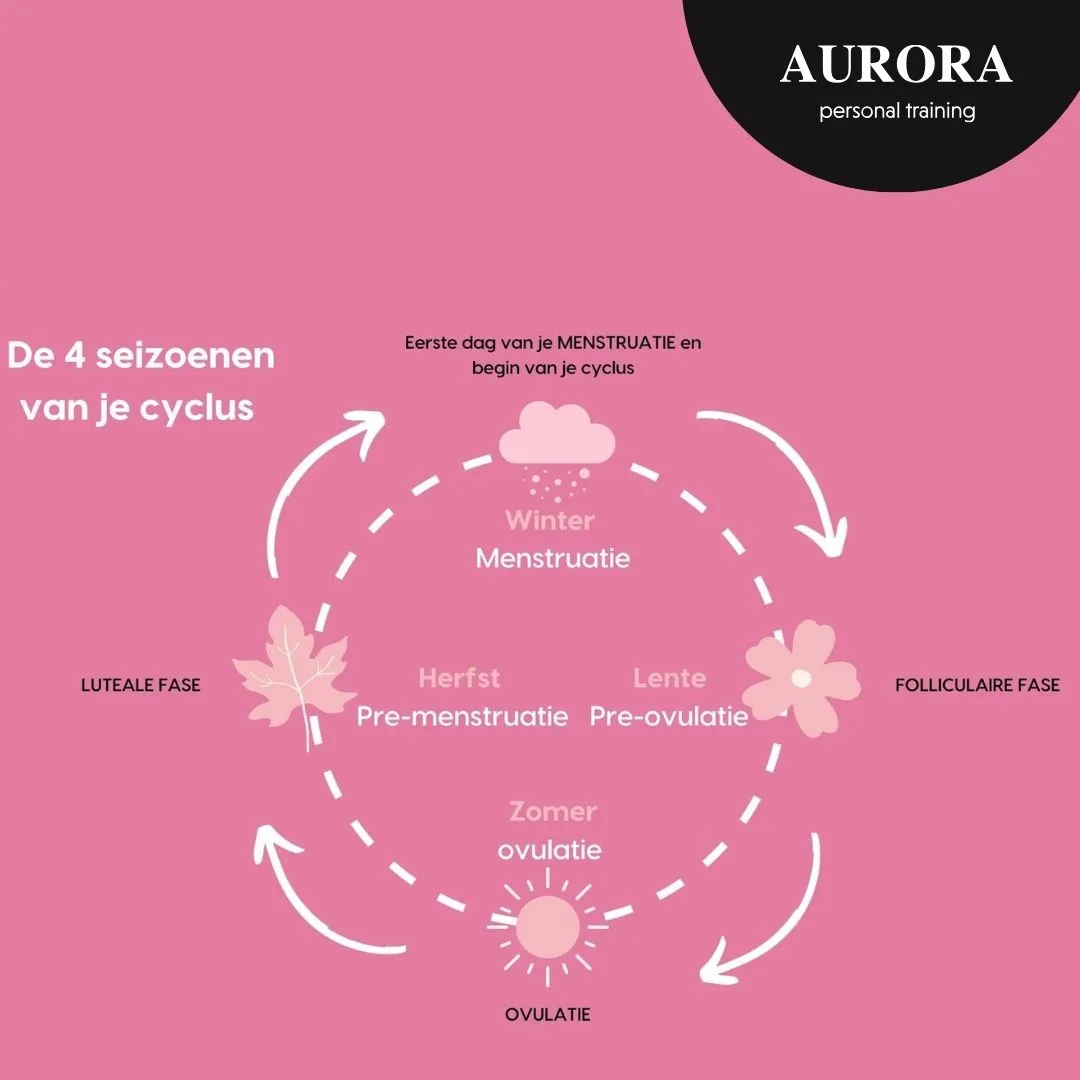
Phase 2 – Follicular Phase (Spring | Days 6–14)

Build-up, energy and progression

After menstruation, estrogen and testosterone rise. Energy increases, recovery improves and training often feels “light.”

Training focus

  • Heavier strength training

  • Progressive overload

  • HIIT or higher-intensity sessions

This is an ideal phase to:

  • introduce new exercises

  • push strength progression

  • increase training volume

👉 Related:
Progressive Overload: How to Keep Getting Stronger

Nutrition focus

  • Adequate protein intake

  • Antioxidants (berries, leafy greens)

  • Zinc, vitamin E and calcium

👉 Learn more:
Nutrition & Muscle Growth

strength training menstrual cycle

Phase 3 – Ovulatory Phase (Summer | Days 12–17)

Peak strength and explosiveness

Around ovulation, energy levels often peak. Strength, coordination and confidence are at their highest.

Training focus

  • Heavy compound lifts

  • Explosive strength

  • Performance-based training

⚠️ Note: higher estrogen can slightly increase joint vulnerability. Proper warm-ups and good technique are essential.

Nutrition focus

  • High protein intake (recovery & muscle growth)

  • Fiber-rich foods

  • Omega-3 fats (fatty fish, chia seeds)


Phase 4 – Luteal Phase (Autumn | Days 18–28)

Structure, recovery and listening to your body

Progesterone rises, body temperature increases and energy may decline. This phase is often associated with cravings, fatigue and tension.

Training focus

  • Moderate intensity

  • Reduced volume or load

  • Core stability and technique

  • Light cardio

At Aurora, we place extra emphasis on:

  • recovery

  • stress management

  • consistency without overload

👉 Read also:
Personal Training for Stress & Recovery

Nutrition focus

  • Magnesium and vitamin B6

  • Healthy fats

  • Stable protein intake

👉 Learn more:
Healthy Fats & Hormonal Balance


Why Cycle-Based Training Works

By training in sync with your cycle, you:

  • improve strength and recovery

  • reduce injury risk

  • prevent overtraining

  • support hormonal balance

  • work with your body, not against it

At Aurora, this approach is integrated into Personal Training for Women, always tailored to your goals, schedule and recovery capacity.

👉 Learn more:
Personal Training for Women in Eindhoven


Tracking Your Cycle: Simple & Practical

You can track your cycle using:

  • apps

  • basal body temperature

  • symptom tracking

This provides insight into:

  • energy levels

  • recovery capacity

  • optimal training timing


Possible Causes of a Disrupted Cycle

  • Chronic stress

  • Undereating

  • Excessive training

  • Sleep deprivation

  • Deficiencies in vitamin D, magnesium or zinc

👉 Related:
Recovery, Sleep & Performance


Conclusion

Strength training and the menstrual cycle are closely connected. By adjusting training and nutrition per phase, you achieve sustainable progress — physically and mentally.

At Aurora Personal Training Eindhoven, we guide women who want to train consciously, with attention to strength, recovery and hormonal balance.

👉 Curious what this means for you?
Plan a free intake

More articles

Shoulder warm-up for strength training

High-Protein Cashew Chocolate Bars

Loaded Upper Back Mobility

Request your free trial lesson now!

Contact us today and schedule your free trial lesson!