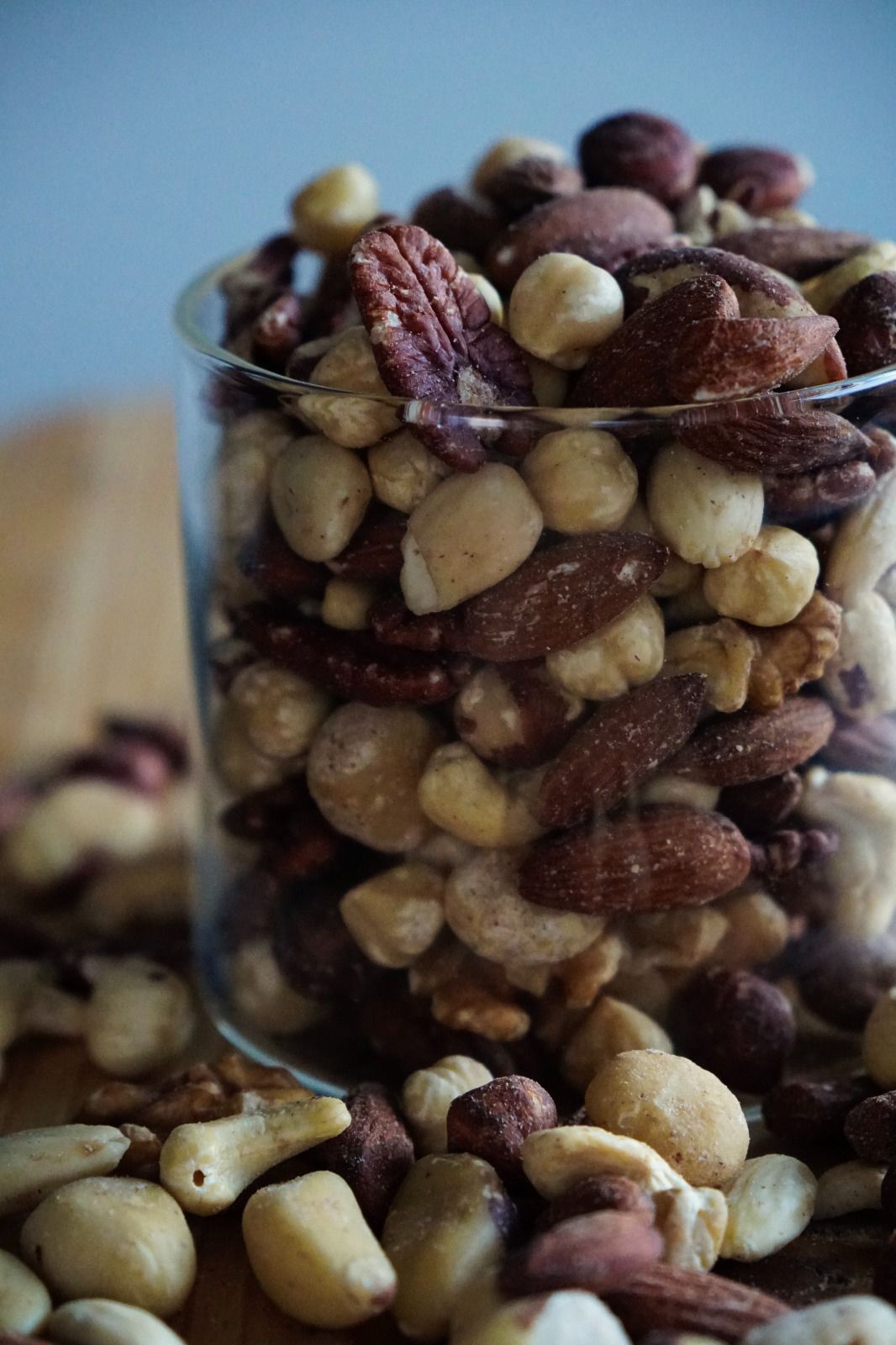
Can You Eat Too Many Nuts?
Yes—and it happens more often than people think.
Nuts are calorie-dense and easy to snack on “because they’re healthy.”
A small bowl of nuts can quickly reach 400–600 kcal, without providing the same satiety as a full meal.
Simple and Effective Guidelines
-
Choose 1–2 types of nuts at a time (instead of a mix)
-
Aim for 20–30 grams per day (a small handful)
-
See nuts as a supplement, not a foundation
More variety is not always better—especially if your digestion feels unsettled.
How to Make Nuts Easier to Digest
Soaking and Light Roasting
If you want to make nuts more digestion-friendly, soaking and gentle roasting can help.
Step-by-step:
-
Soak nuts for 6–12 hours in plenty of water
-
Drain (the water may discolor)
-
Pat dry with a towel
-
Roast at 80°C (175°F) for ±2 hours
-
Let cool and store airtight
Possible benefits:
Optional: add spices such as cinnamon or rosemary.
Tip: prepare a larger batch and store it airtight—so you always have a “smart snack” available.
Are Roasted Nuts Always Better?
Not necessarily. For many people, small amounts of raw nuts are perfectly fine.
What matters is context:
-
How often do you eat nuts?
-
How much do you eat at once?
-
How is your stress level and recovery?
-
Do you experience digestive issues?
-
Do you combine nuts with other heavy foods?
This is where the difference lies between “healthy” and “smart.”
Practical Nutrition Advice from Aurora Personal Training
At Aurora, we don’t focus on single foods—we look at the bigger picture:
-
training load
-
recovery and sleep
-
stress and energy levels
-
digestion
-
weekly eating structure
Nuts can play a valuable role—but only if they fit your body and lifestyle. That’s why we prioritize quality and work with suppliers who are transparent about sourcing and processing.
👉 Want to align your nutrition with your training and recovery?
Explore our personal training in Eindhoven, including lifestyle and nutrition coaching.
Conclusion: How Healthy Are Nuts?
Nuts are neither “good” nor “bad.”
They are context-dependent.
Smart, if you:
Less smart, if you:
-
snack on large amounts “because they’re healthy”
-
combine many varieties
-
struggle with digestion, stress, or low energy
Health is not found in extremes—but in alignment.
Want to Know What Works for You?
During a free intake session at Aurora Personal Training in Eindhoven, we look beyond training alone. We also assess nutrition and lifestyle—practical, personal, and evidence-based.
👉 Book a free intake session
Aurora Personal Training
Train hard. Recover smart. Live consciously.