Healthy Chicken Nasi with Brown Rice and Vegetables

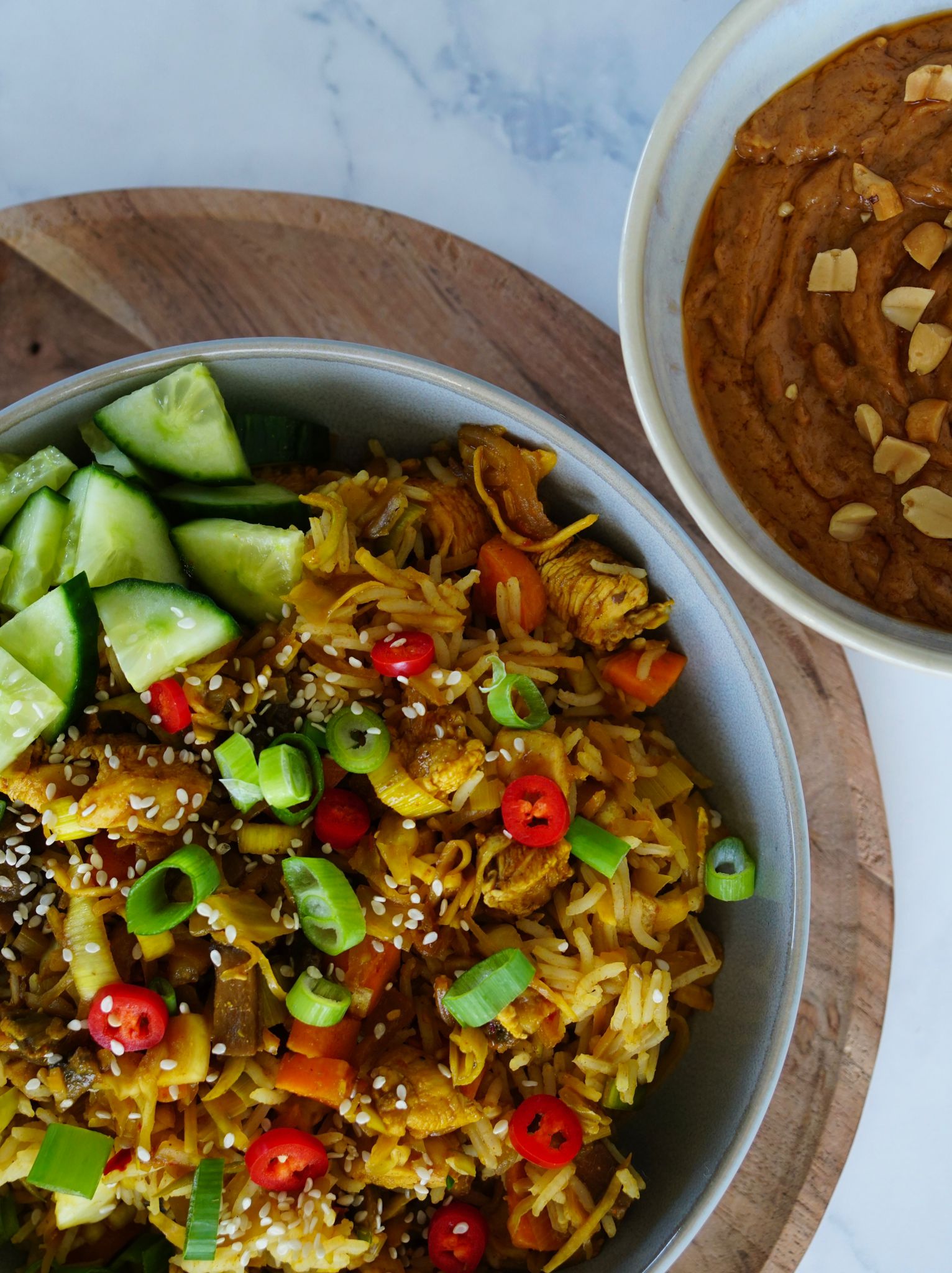
This healthy chicken nasi combines brown rice with leek, cabbage, mushrooms, and carrots. The recipe makes 4 servings. Cumin, turmeric, ginger, trassi, and ketjap provide the flavor without a ready-made nasi seasoning mix.

The measured amounts of pointed cabbage, white cabbage, mushrooms, and carrots alone add up to 1,150 grams. That is before adding the leek and red onion. You will make a generous panful, with the option to save portions for another day.

Healthy Chicken Nasi Recipe: 4 Servings

Servings: 4
Equipment: a large wok, a saucepan for the rice, a cutting board, and a knife.

Ingredients

  • 500 g chicken breast, diced
  • 300 g brown rice
  • 1 leek
  • 250 g pointed cabbage
  • 250 g white cabbage
  • 400 g mushrooms
  • 250 g carrots
  • 1 red onion
  • ½ red chili pepper
  • 1 tsp sambal
  • 1 tbsp trassi (shrimp paste)
  • 2 tbsp ketjap (preferably a reduced-salt variety)
  • 2 tsp cumin
  • 1 tsp turmeric
  • 1 tsp ground ginger
  • Chicken seasoning to taste
  • Olive oil for cooking

Optional: spring onion, cucumber, homemade satay sauce

Gezonde-nasi-met-kip

Method

  1. Finely chop all the vegetables. Finely chop the red onion and red chili pepper. Dice the chicken and season to taste.
  2. Cook the brown rice according to the package instructions.
  3. Heat olive oil in a wok and cook the chicken until golden and cooked through.
  4. Add the red onion, red chili pepper, and trassi. Cook briefly until fragrant.
  5. Add all the vegetables and stir-fry for 5–7 minutes.
  6. Add the sambal, ketjap, cumin, turmeric, and ginger, and mix well.
  7. Add the rice and stir-fry everything together for another 2–3 minutes.
  8. Serve with spring onion and cucumber for extra freshness.

What Makes This Nasi a Nourishing Meal?

This nasi combines vegetables, a whole grain, and chicken. The brown rice provides carbohydrates and fiber, while the chicken contributes protein. The different vegetables add volume and variety to the meal.

Brown rice is a whole-grain food. Whole-grain products generally contain more fiber than their refined counterparts and are included in the Dutch Wheel of Five dietary guidelines. This makes brown rice a suitable base for this recipe.

When divided evenly, each serving contains the following amounts from the ingredient list:

Ingredient Whole recipe Per serving, when divided into 4
Chicken breast 500 g 125 g
Brown rice, before cooking 300 g 75 g
Pointed cabbage, white cabbage, mushrooms, and carrots combined 1,150 g 287.5 g
Leek and red onion 1 leek and 1 red onion A quarter of each

These are amounts before cooking, not the final weight on your plate. Rice absorbs water, while other ingredients lose moisture during cooking.

The exact calories, protein, and salt in your serving also depend on the products you use, the amount of oil, and any satay sauce. Without that information, an exact nutritional value would not be reliable.

Nasi Without Seasoning Packets: What Does That Mean Here?

This recipe does not use a ready-made nasi seasoning mix. The flavor comes from individual spices, red chili pepper, sambal, trassi, and ketjap. Chicken seasoning remains part of the recipe.

That does not automatically make the dish free from added sugar, salt, or other additives. Ketjap, sambal, and chicken seasoning vary by brand. Check the label if you want to account for those ingredients. The original recipe’s preference for ketjap with less salt gives you something to compare when choosing a product.

Practical Cooking Tips

  • Use a roomy wok. You are cooking over a kilo of vegetables, plus chicken and rice. Leave enough space to stir everything properly.
  • Chop the vegetables finely and evenly. Thinly sliced carrots and cabbage are particularly suited to the short stir-frying time in the recipe.
  • Follow the rice package instructions. Cooking times vary between brown rice products. Drain any excess cooking water before adding the rice to the vegetables.
  • Measure out the seasonings beforehand. This lets you keep stirring while adding the correct amounts.

How to Store, Freeze, and Reheat Chicken Nasi

You can make this nasi ahead of time if you cool the portions quickly and store them properly. Voedingscentrum, the Netherlands Nutrition Centre, advises refrigerating or freezing meal leftovers within two hours.

What do you want to do? How to do it
Cool the nasi Divide leftovers between small containers, cool quickly, and place them in the fridge or freezer in sealed containers within 2 hours.
Store in the fridge Keep at 4 °C and eat within 2 days.
Store in the freezer Freeze in portions and use within 3 months. Label each container with the preparation date.
Reheat Heat thoroughly until steaming hot throughout. Stir well, including when using a microwave.

These storage times and methods follow the Netherlands Nutrition Centre’s guidance for rice and meal leftovers.

Only reheat the portion you intend to eat. If some remains after reheating, do not save it for another round of reheating.

If you are cooking for two, you could eat two servings and store the remaining two separately. If you plan to eat those more than two days later, freeze them after cooling.

Does This Nasi Fit Weight Loss or Strength Training?

This meal can fit different goals. Whether the portion is right for you depends on your overall diet, activity, and needs.

For weight loss, the amount of oil and any satay sauce you use also matter, along with your portion size. Calling a dish healthy does not automatically make it low in calories. For strength training, the chicken is one of the protein sources in your day; your other meals count too.

Want to understand how protein, carbohydrates, and fats fit together? Read our guide to macronutrients.

Frequently Asked Questions About Chicken Nasi

Is the 300 Grams of Rice Weighed Cooked or Uncooked?

Weigh the rice before cooking. Use 300 grams of uncooked brown rice for the whole recipe, then cook it according to the package instructions. Divided into four servings, that is 75 grams of uncooked rice per person.

Which Vegetables Are in This Nasi?

The recipe includes leek, pointed cabbage, white cabbage, mushrooms, carrots, and red onion. Red chili pepper contributes to the heat. Cucumber and spring onion are optional additions when serving.

Can I Make This Nasi the Day Before?

Yes. Cool the nasi quickly after cooking, refrigerate within two hours, and store at 4 °C. Reheat your portion thoroughly the next day. Keep the meal in the fridge for no longer than two days.

Is This Nasi Gluten-Free?

Not automatically. Ketjap can contain wheat. Check the ingredients and allergen information for the other seasonings and any satay sauce too. Using gluten-free rice alone does not make the entire meal gluten-free.

Which Allergens Should I Check For?

Trassi usually contains shrimp, which are crustaceans. Ketjap contains soy and may contain wheat. Peanuts may be relevant when serving satay sauce. Always check the labels on your products and the ingredients in any homemade sauce.

More Dinner Inspiration

Looking for another dish with chicken and vegetables? Try our red chicken curry recipe.

Would you like help making your meals work with your training and daily routine? At Aurora Personal Training in Eindhoven, we discuss your goals and which habits are realistic for you. Book a free consultation to get started.

Sources for the nutrition and storage advice

More articles

Fundamental bodyweight movement patterns

Shoulder warm-up for strength training

High-Protein Cashew Chocolate Bars

Request your free trial lesson now!

Contact us today and schedule your free trial lesson!