Red chicken curry recipe: 4 servings
| Recipe detail | Amount or preparation |
|---|---|
| Servings | 4 |
| Chicken breast | 400 g |
| Coconut milk | 200 ml, canned |
| Red curry paste | 2 tablespoons |
| Rice | 250–300 g, weighed uncooked |
| Stir-frying the vegetables | 5 minutes, after cooking the chicken |
| Gentle simmering | 10–15 minutes with the lid on |
| Equipment | Large wok or sauté pan with a lid, saucepan for rice, knife and cutting boards |
Cook the rice while preparing the curry. The total preparation time depends on chopping, cooking the chicken through and the cooking time of your rice.
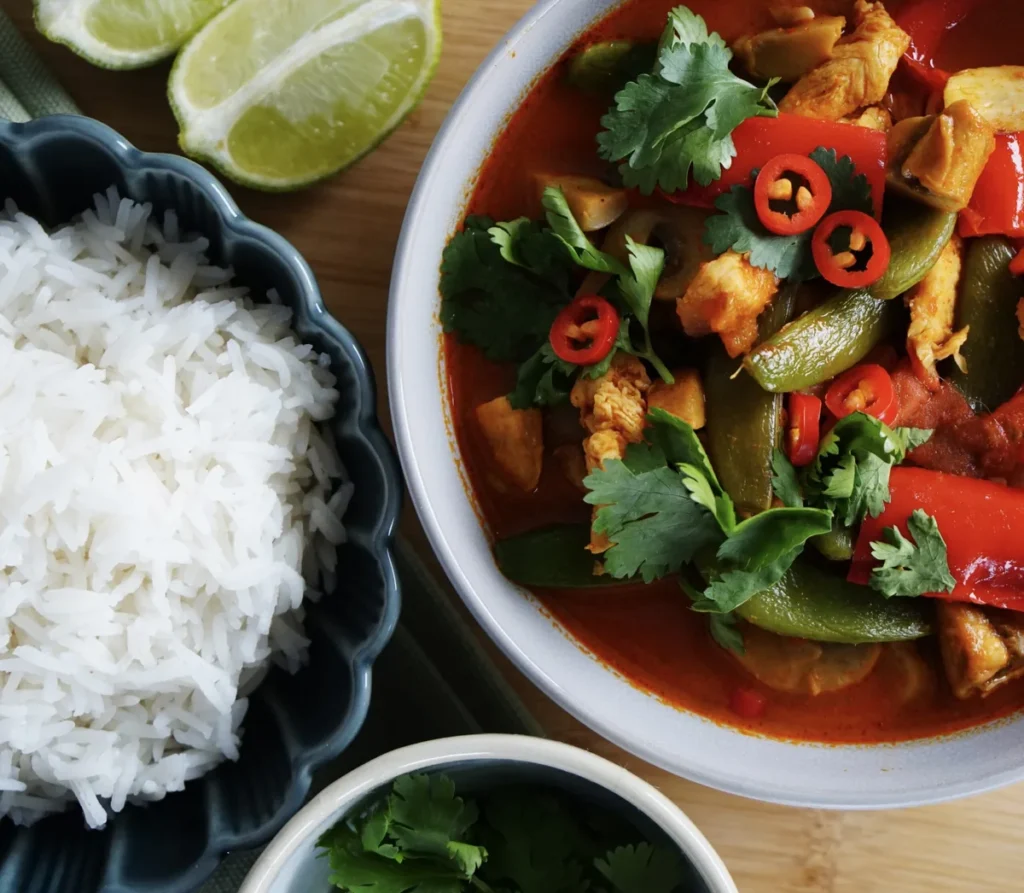
Ingredients
Optional for serving
Use canned coconut milk for the sauce. A coconut beverage intended for drinking is a different product and will not necessarily give the same texture.
How to make red chicken curry, step by step
1. Cut and season the chicken
Cut the chicken breast into roughly equal-sized cubes and add the chicken seasoning. Use a separate cutting board for raw chicken, or clean the board and knife before preparing other ingredients. Wash your hands after handling raw chicken and do not rinse the chicken. [1]
2. Prepare the vegetables
Cut the pointed bell peppers, mushrooms, red onion and tomatoes into bite-sized pieces. Remove any tough ends or strings from the sugar snap peas. Finely chop the half chili pepper.
3. Cook the rice
Cook the 250–300 g of rice according to the package instructions. The ingredient list gives the weight before cooking. Rice absorbs water as it cooks.
4. Briefly fry the red curry paste
Heat a splash of olive oil in a large wok or sauté pan. Add the 2 tablespoons of red curry paste and briefly fry, stirring, until fragrant. Do not let the paste burn.
5. Cook the chicken through
Add the chicken cubes and cook them through. Stir regularly so that all sides are heated. The cooking time depends on the size of the cubes and the heat of your pan. Chicken must be thoroughly cooked. [1]
6. Add the vegetables
Add the bell peppers, mushrooms, sugar snap peas, onion, tomatoes and chili. Stir-fry everything for 5 minutes, stirring regularly.
7. Gently simmer the curry
Pour in the 200 ml of coconut milk and stir well. Reduce the heat, cover the pan and simmer gently for 10–15 minutes. Stir occasionally and check whether the vegetables have reached your preferred texture.
8. Adjust the seasoning
Add lime juice, pepper and salt if needed. Taste first: curry paste and chicken seasoning may already contain salt. Add the lime juice a little at a time.
9. Serve the curry
Divide the rice and curry between four plates or bowls. Top with fresh cilantro and cashews if you like. Serve with naan bread if desired.
Tips for a flavorful curry and a good sauce
- Use a spacious pan. It needs to hold all the vegetables and leave room for stirring.
- Briefly fry the curry paste. Keep stirring and add the chicken before the paste burns.
- Simmer the sauce gently. Keep the heat low enough for gentle bubbling.
- Taste before adding salt. Your seasoning products partly determine how salty the finished dish becomes.
- Add lime at the end. This lets you adjust the freshness to the finished sauce.
What should you do if the sauce needs adjusting?
| What happens? | What can you do? |
|---|---|
| The sauce is thin | Simmer briefly without the lid, stirring regularly; vegetables can release moisture |
| The sauce becomes too thick | Add a small splash of water when heating and stir well |
| The curry is too spicy | Serve with rice and use a milder paste or less chili next time |
| The curry paste burns | Reduce the heat and keep stirring during the brief frying step |
| The vegetables become very soft | Check them during simmering and stop when they reach your preferred texture |
Add extra water in small amounts. If you reduce the sauce, check regularly to avoid making it thicker than you want.
Which red curry paste should you use?
Choose a red curry paste with a flavor and heat level you enjoy. Two tablespoons of one brand can taste quite different from two tablespoons of another. Check the packaging and any suggested amounts.
The base recipe uses 2 tablespoons of curry paste and half a red chili pepper. For a milder version, use less chili or start with less curry paste.
Check the label if you need to consider allergens or want to prepare a vegetarian version.
Is red chicken curry healthy?
This meal combines chicken, several vegetables, rice and coconut milk. Chicken provides protein, while rice mainly provides carbohydrates. Brown rice contains more fiber than white rice. [3]
Coconut milk makes the sauce creamy and also provides saturated fat. The amount of fat in your portion depends on the coconut milk you use and the other ingredients. [4]
Your portion and the rest of your diet also matter. Cashews, oil and naan bread change the amount of energy in the meal. Enjoy the curry as part of your usual eating pattern, without assuming that it automatically improves recovery or promotes fat loss.
Want to understand how protein, fat and carbohydrates fit together? Read our guide to macronutrients.
How do you divide the recipe into four portions?
| Ingredient | Amount per serving before cooking |
|---|---|
| Chicken breast | 100 g |
| Uncooked rice | 62.5–75 g |
| Coconut milk | 50 ml |
Divide the vegetables and sauce as evenly as possible too. These are ingredient quantities from the recipe, rather than calculated nutrition values. Adjust your portion size to your own needs.
How to store, freeze and reheat red chicken curry
Refrigerating leftovers
Cool the curry and rice quickly and place them in sealed containers in the refrigerator or freezer within 2 hours. Small portions cool faster than a full pan. Keep your refrigerator at 4 °C and eat refrigerated leftovers within 2 days. [2, 3]
Store the rice and curry separately if possible. This makes it easier to divide portions and reheat both thoroughly. Keep cilantro, cashews and naan bread separate until serving.
Freezing for meal prep
For longer storage, freeze cooled portions and label them with the date. The Netherlands Nutrition Centre gives 3 months in the freezer as a general guideline for leftovers and cooked rice. [2, 3]
Thaw a portion in the refrigerator or use your microwave’s defrost setting.
Reheating
Reheat only the portion you plan to eat. Heat the curry and rice until steaming hot throughout, stirring regularly, including when using a microwave. Reheat stored leftovers once. Discard anything left over after that reheating. [2]
Frequently asked questions about red chicken curry
How spicy is red chicken curry?
It depends mainly on the curry paste and chili. This recipe uses 2 tablespoons of paste and half a chili pepper. For a milder version, use less chili or less paste. The color of a curry paste does not tell you exactly how spicy the finished dish will be.
Which rice goes well with red curry?
This recipe uses brown rice or basmati rice. Brown rice provides more fiber than white rice. Basmati has a different aroma and texture. Choose the type you prefer and follow the cooking time on the packaging. [3]
Can you make this curry vegetarian?
Yes. For an adapted version, replace the chicken with firm tofu. Check that the curry paste is vegetarian too and prepare the tofu according to its instructions. The original recipe above contains chicken.
Is red chicken curry gluten-free?
Not automatically. Check the red curry paste, chicken seasoning and other packaged ingredients. Use suitable gluten-free products and prevent cross-contact. Regular naan bread usually contains wheat; leave it out or choose a suitable gluten-free version when needed. [5]
How many calories are in a serving of red chicken curry?
That depends on your coconut milk, curry paste, amount of oil, choice of rice and toppings. For a figure that matches your meal, calculate the nutrition values of all the ingredients you actually use, including the uncooked rice, and divide the total by four. Include cashews and naan bread if you serve them.
Can red chicken curry fit into a weight-loss plan?
It can. Whether a portion fits depends partly on your energy needs and how much you eat across the whole day. Include the oil, coconut milk, rice and extras when considering your portion. [6]
Variations on the original recipe
- With tofu or shrimp: use these in an adapted version or as an addition, preparing them according to their product instructions. Tofu makes the dish vegetarian only when you leave out the chicken and use a suitable curry paste.
- With cauliflower rice: replace the regular rice if you want to eat less rice. This changes the nutritional composition of the meal.
- With extra heat: use more chili or curry paste in an adapted version.
The ingredient list and quantities above belong to the original chicken curry.
Sources for the additional guidance
- Netherlands Nutrition Centre — Handling chicken safely.
- Netherlands Nutrition Centre — Cooling, storing, freezing and reheating leftovers.
- Netherlands Nutrition Centre — Rice, fiber and safe storage.
- Netherlands Nutrition Centre — Coconut milk and saturated fat.
- Netherlands Nutrition Centre — Gluten, labels and cross-contact.
- Netherlands Nutrition Centre — Healthy weight loss and eating habits.
These sources are in Dutch.