Pumpkin and carrot soup recipe: 4–6 servings
Yield: 4–6 servings, depending on the size of your bowls.
Oven temperature: 200°C.
Roasting time: 30 minutes. Allow additional time for preheating, chopping, heating and blending.
Equipment: oven, baking tray, baking paper, cutting board, knife, soup pot and immersion blender.
Ingredients
Optional toppings
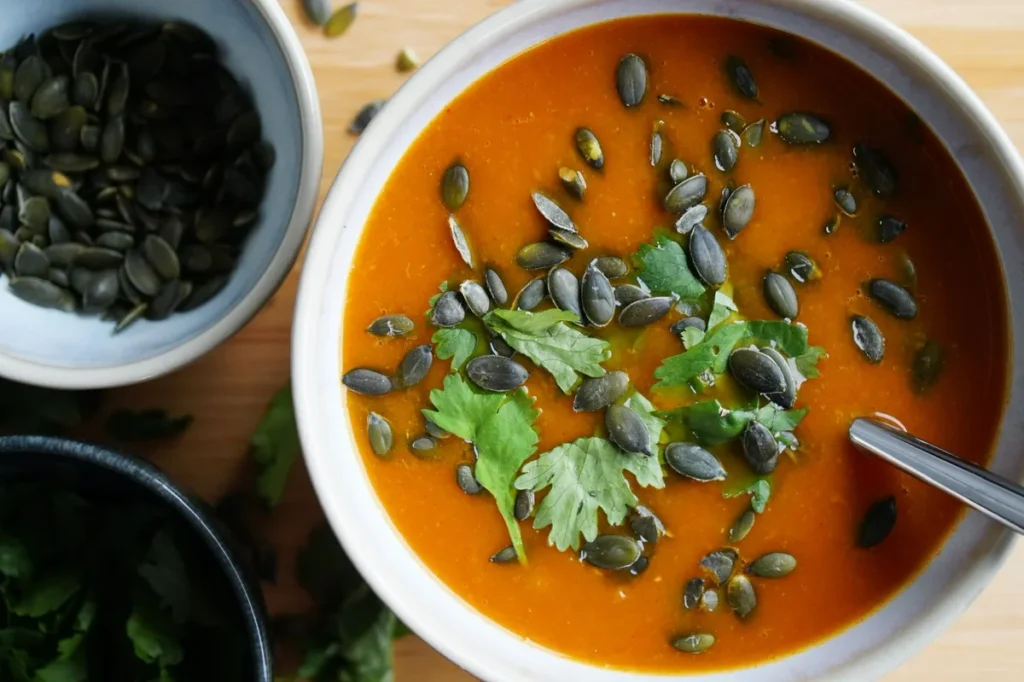
Before you start
Clean the vegetables and remove the seeds and stringy center from the butternut squash. Cut the vegetables into similarly sized pieces to help them cook evenly.
This recipe uses half an orange. Roast that half with the vegetables and add only its juice to the soup later. Do not blend the orange peel into the soup.
Instructions
- Preheat the oven to 200°C.
- Cut the butternut squash, carrots and red onion into large chunks. Place them on a baking tray lined with baking paper.
- Halve the orange and place the half you need cut-side up among the vegetables. Add the unpeeled garlic cloves.
- Drizzle everything with olive oil and mix well.
- Roast the vegetables for 30 minutes until soft and lightly caramelized.
- Transfer the roasted vegetables to a pot. Squeeze the garlic out of its skin and add it.
- Add the stock and spices, leaving out the lemon juice for now.
- Heat everything through, then squeeze the roasted orange half over the pot.
- Add the lemon juice and blend with an immersion blender until smooth.
- Season with salt and pepper and serve with the toppings.
Why roast the squash and carrots first?
Roasting gives the vegetables lightly browned edges and a fuller flavor. Spread the pieces in a single layer as much as possible. If they are crowded together, moisture cannot escape as easily and they will not brown as well.
After the stated 30 minutes, check whether a fork slides easily into the squash and carrots. The size of the pieces and your oven affect the cooking time. If they are still firm, give them a little longer: tender vegetables are easier to blend into a smooth soup.
The creamy texture comes mainly from blending the cooked vegetables. You do not need to add cream, coconut milk or potatoes.
How to get the right soup consistency
The recipe uses 800–1000 ml of vegetable stock. This range lets you adjust the consistency because butternut squashes vary in size.
Start with 800 ml and keep the rest aside. Blend the soup, then add more of the reserved stock only if you want it thinner.
| What do you notice? | What can you do? |
|---|---|
| The soup is too thick | Add a little reserved stock, stir and check the consistency again. |
| The soup is too thin | Simmer gently with the lid off, stirring regularly, to reduce it. |
| There are still chunks | Check that the vegetables are fully tender and blend for longer. |
| The flavor seems flat | Taste after adding the orange and lemon juice, then adjust the seasoning. |
Stock often already contains salt, so taste before adding more.
What do the orange and spices add?
The orange roasts alongside the vegetables before you squeeze its juice into the pot. Together with the lemon juice, it adds a fresh note to the sweeter squash and carrots.
Cumin and paprika give the soup a savory, spiced flavor. Cinnamon adds warmth, while cayenne provides heat. The quantities in the recipe are for the entire pot of 4–6 servings.
Add the spices and lemon juice at the stages specified in the instructions. This keeps the method straightforward and lets you taste the finished combination before making any final seasoning adjustments.
Storing, freezing and reheating pumpkin and carrot soup
You can make this soup ahead. Divide any soup you want to store into smaller containers, cool it quickly and place it in the refrigerator or freezer in sealed containers within 2 hours.
| Storage method | Guideline |
|---|---|
| Refrigerator at 4°C | Eat within 2 days. |
| Freezer | Store for up to 3 months; quality may decline after that. |
Label the containers with the date you made the soup. Keep the pumpkin seeds and coriander separate and add them when serving.
Reheat only the portion you plan to eat. Heat it until steaming hot throughout, stirring regularly. Avoid reheating the same portion a second time.
What can you serve with pumpkin and carrot soup?
Serve a small bowl as a starter or pair the soup with something extra for lunch, such as whole-grain bread with hummus. If you want more protein with your meal, you could serve it alongside a dish containing lentils, chickpeas or chicken.
These are serving suggestions and are not part of the original recipe’s ingredient list. You can make the soup exactly as described above.
A bowl of vegetable soup is not automatically a complete meal for everyone. Your portion, what you serve alongside it and your overall eating pattern determine how it fits your goals. Read our guide to macronutrients to learn more about protein, carbohydrates and fats.
Frequently asked questions about pumpkin and carrot soup
Which type of pumpkin or squash should I use?
This recipe uses butternut squash. As the recipe does not specify a weight, the yield and consistency may vary slightly. Adjust the stock within the stated range to achieve the texture you prefer.
Do you need to peel the butternut squash?
Butternut squash skin is edible, but it can be tough. For the smoothest soup, you can remove a thick, hard skin before cooking. Always remove the seeds and stringy center. The ingredient list and seasoning remain the same.
Is this pumpkin and carrot soup vegan and lactose-free?
It can be, provided you use a fully plant-based vegetable stock. No cream, milk or butter is added. Check the stock label, however: the name “vegetable stock” alone does not guarantee that it contains no milk-derived ingredients.
Is the soup gluten-free and free from allergens?
To make a gluten-free soup, the stock and other packaged ingredients must also be suitable. Check their labels. Do not assume the soup is allergen-free: vegetable stock can contain celery, for example.
How many calories are in this soup?
An exact figure cannot be calculated from this ingredient list alone. The weight of the squash and carrots, the amount of oil, the toppings and the number of servings all affect the result. For a reliable calculation, weigh the ingredients you use and divide the soup into a fixed number of servings.