Why body proportions affect your squat
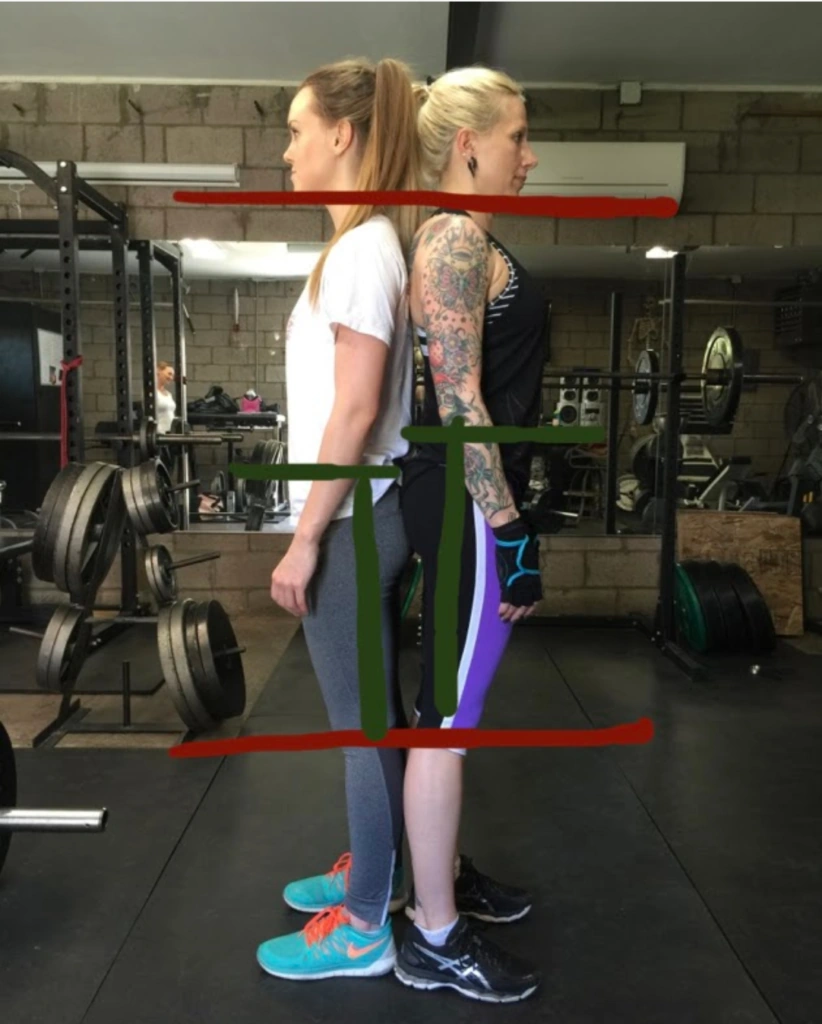
The relationship between your thighs, lower legs and torso affects the positions you can use while staying balanced. Thigh-to-torso proportions are particularly relevant; overall height alone says relatively little.
With relatively long femurs, more forward torso inclination may be needed. The amount also depends on ankle movement, hip position, stance width and where the load is held. You cannot judge an individual squat from one body measurement.
A biomechanical review explains how torso position, shin position and squat depth affect the distribution of mechanical demands. See the 2024 biomechanical review.
Why two good squats can look different
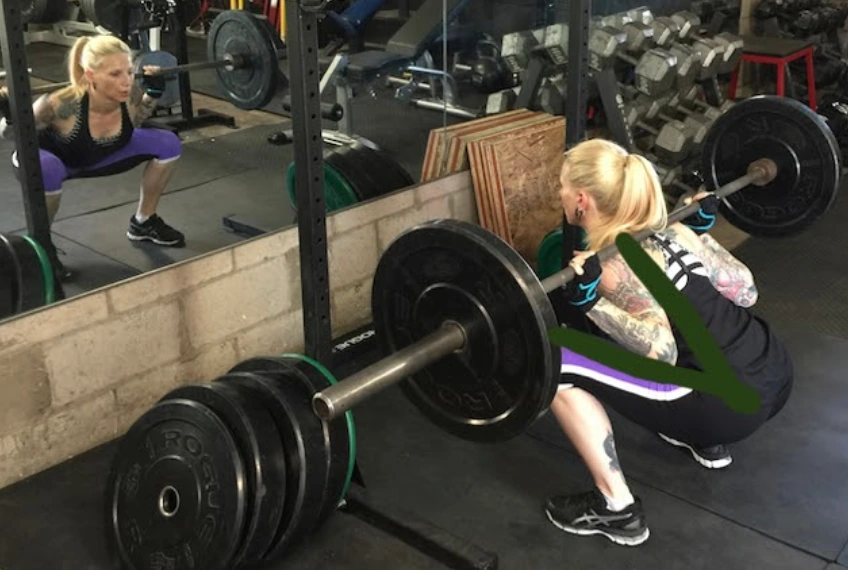
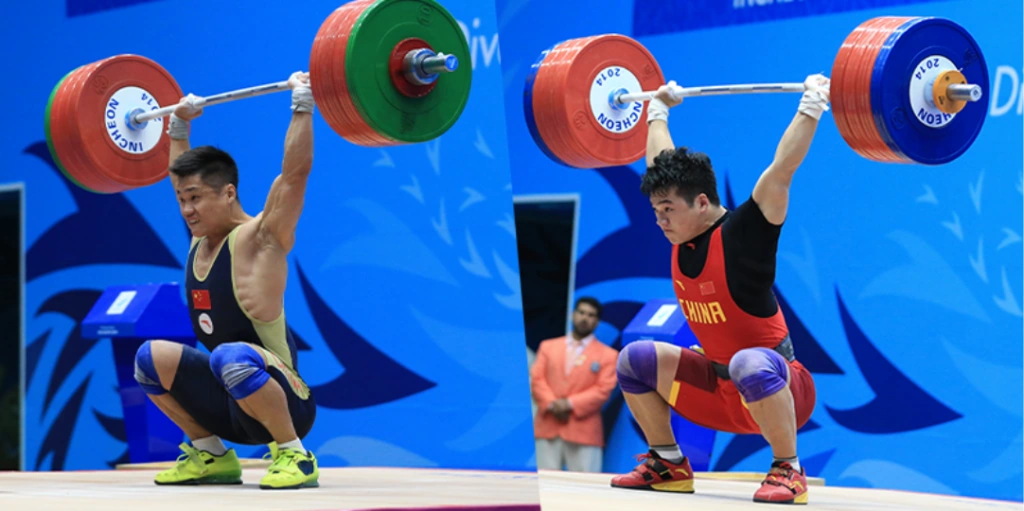
The comparison images illustrate how body proportions can appear during the same exercise. They help explain the principle; they are not a way to rank the strength of the people shown.
Inclining the torso at the hips is different from losing control of spinal position. Consider the whole movement: support through the feet, control of the selected depth and repeatable hip, knee and torso positions.
A photograph alone cannot reliably predict a maximum lift or diagnose the cause of a movement difficulty.
Assess the whole movement
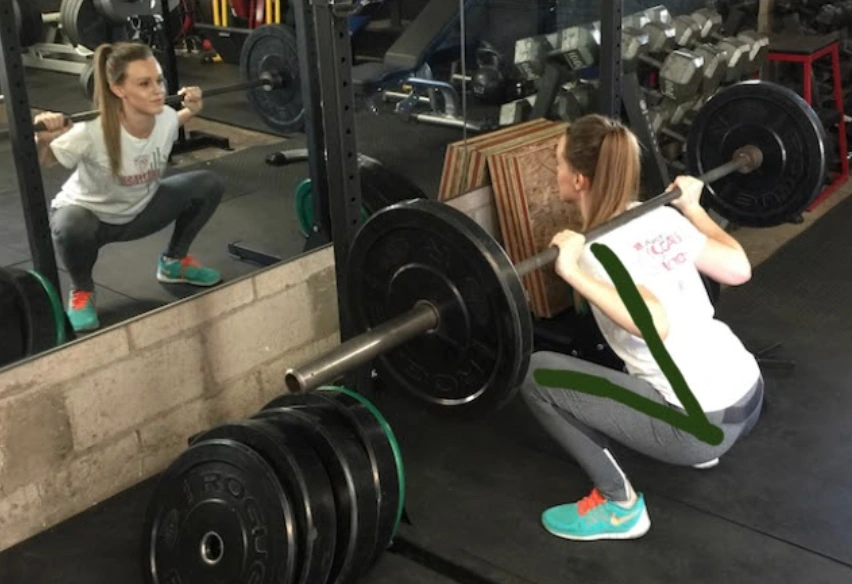
The second example also marks the thigh and torso. The final position comes from several joints moving together.
The useful question is not whether your back matches somebody else’s exact angle. It is whether you can control the chosen squat and develop the loading appropriately.
For the underlying mechanics, read how strength and moment arms work.
Which parts of your squat technique can you adjust?
Stance width and foot position
Narrower or wider stances and different foot angles change the movement. Research shows that stance, foot position, experience and loading interact. Femur length alone does not identify one correct stance. See Lorenzetti et al. (2018).
Where you hold the load
A goblet squat places the weight in front of you. Other variations position the load differently, affecting balance and the positions you can adopt. Establish a variation you can control before making extra weight the priority.
Ankle movement and heel elevation
A stable heel wedge or weightlifting shoe can change the distribution of movement. It is an option, not proof of a “bad” ankle and not a requirement for everyone with long femurs. A recent review found changes in ankle and knee range of motion without establishing one universally optimal heel height. See the 2026 heel-elevation review.
A weightlifting squat is not a universal model
Weightlifters may need a deep position to receive a barbell overhead. The photograph shows a sport-specific receiving position.
Your goal may be general strength, easier chair rises or stronger legs. A deep competitive position does not have to be your compulsory endpoint. Practise a range of motion that suits your goal and that you can control.
Build is one influence among several. Experience, mobility, the chosen variation and load also matter. A comparison with elite athletes does not establish the weight or depth you should achieve.
A practical checklist for your next squat
- Start with a light load on a stable surface.
- Observe the movement from the side and front, or ask a trainer to assess it.
- Look for a repeatable movement and contact with the floor.
- Change one feature at a time, such as stance width or load position.
- Compare the whole movement rather than only how upright you stay.
- Build the load when you can repeat the selected execution.
This is an observation framework, not an individual movement diagnosis. Do not force a painful position. Recurring symptoms warrant assessment by an appropriate professional.
Then include the chosen variation in a routine you can maintain. Read how to build a strength-training plan.
Frequently asked questions
Are long femurs bad for squatting?
No. Relatively long femurs change the mechanical task and may call for a different stance, variation or torso position. They do not automatically make you unsuited to squatting.
Should my torso stay completely upright?
No single torso angle applies to everyone. Body proportions, exercise variation and load influence the position. Control and repeatability are more useful than matching a fixed angle.
Must my knees always stay behind my toes?
That is not a universal squat rule. Movement and loading are distributed across several joints. Forcing a restriction can alter the rest of the execution.
Could a goblet squat feel easier?
It may. Load position affects balance. Try a light variation and assess whether you can control the intended movement more consistently.
Can training change my bone proportions?
You do not “correct” bone proportions through exercise. You can develop strength, skill and loading tolerance, and adapt your execution to your capabilities.
Personal guidance in Eindhoven
Discuss your goals and experience with Roel and explore training that fits your week. Book your free intake.