1. Define your target muscles and training goal
Write down what the exercise should contribute. Are you primarily training your thighs, learning a stronger squat or efficiently combining several muscle groups? These are different tasks.
An exercise can involve several muscles without giving each the same training stimulus. A bench-press set does not automatically make the same contribution to the triceps as a targeted elbow extension.
A small study in untrained adults compared leg extensions with leg presses. Growth differed between muscles: the rectus femoris responded more to the leg extension, while the leg press also trained gluteal and adductor muscles. It illustrates why one exercise does not train every part identically. Kinoshita et al. (2026).
2. Identify what actually limits the set
What makes you stop? The target muscles may become very fatigued, but grip, balance, breathing or another muscle can also end the intended execution. That distinction can inform exercise selection.
If maintaining your torso position dominates a bent-over row, a chest-supported row may help you focus more on the pulling movement. If the whole unsupported task is your goal, the original variation may still be useful.
Another limiting factor does not mean the target muscles received no stimulus. Assess the whole set and several sessions. Muscle sensation, a pump or soreness alone cannot establish optimal muscle growth.
3. Find enough stability and a suitable execution
You want to repeat the selected movement. Extra instability can be a useful training task, but it is not an automatic improvement when your main aim is to challenge one muscle group.
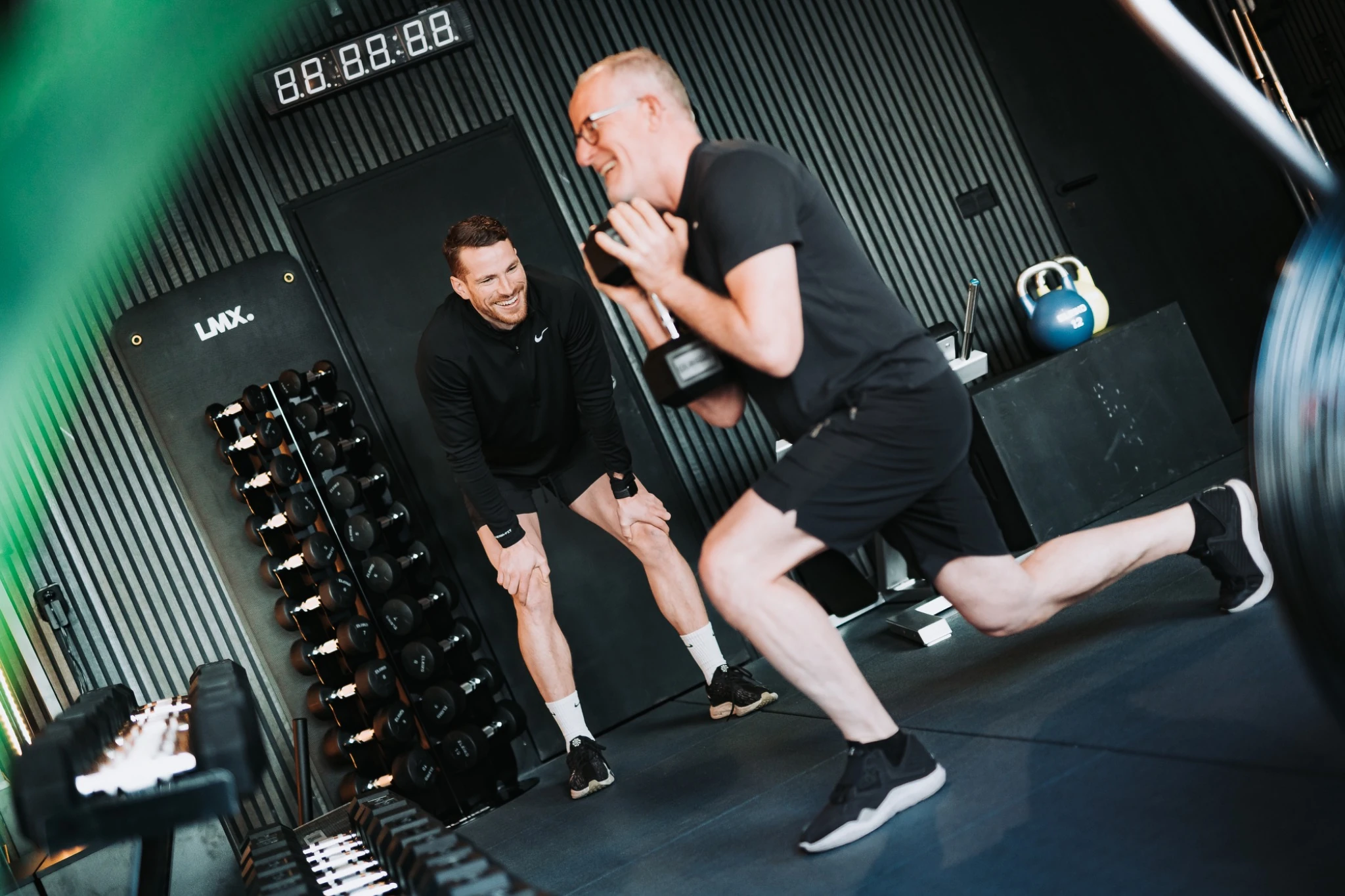
Support during a split squat or a backrest during a press can be practical adjustments. Support does not make an exercise less serious. Equally, not every free-weight exercise needs to be replaced by a machine.
Consider the grip, seat position and movement path. Avoid forcing a painful end position to copy an ideal image. Recurring symptoms warrant appropriate assessment. For equipment choices, see the comparison of machines and free weights.
4. Assess range of motion and muscle position
Choose a range of motion you can control and record what you use. Shortening repetitions every time you add weight makes performances difficult to compare.
Muscle position may also matter. A triceps study found greater growth with overhead cable extensions than with the tested arm-by-the-side execution. This is a specific comparison, not proof that one exercise is compulsory for everyone. Maeo et al. (2023).
Full and partial repetitions are more nuanced than one fixed ranking. Explore range of motion and muscle hypertrophy for the broader explanation. Regular repetitions often include lifting and controlled lowering. Isometric tasks can also serve a purpose; they are not inferior for every goal.
5. Understand where the exercise becomes demanding
A resistance curve describes how external loading changes through the movement. Your ability to produce force also varies with position. A weight that remains the same number of kilograms does not therefore create the same joint torque at every angle.
During a dumbbell curl with a stationary upper arm, the perpendicular distance between the elbow and the weight’s line of force changes. When the forearm is roughly horizontal, that external moment arm is relatively large. The exercise may therefore feel different from a cable variation.
Cable direction, your position and the machine all matter. Using a cable does not mean every exercise is equally demanding throughout. Nor must you find a perfectly matched curve to train effectively.
Bands and chains
An elastic band produces more tension as it stretches further. Bands or chains can make a selected part of a movement more demanding. They require an appropriate setup and do not automatically make a regular execution less effective.
6. Combine compound and isolation exercises deliberately
Compound exercises involve movement across multiple joints. They are practical when you want one exercise to train several muscle groups. Isolation exercises focus movement more on one joint and can add targeted work.
A squat or leg press and a leg extension do not have to be mutually exclusive. Neither do a press and targeted triceps work. Consider what contribution is still missing from the programme.
A larger temporary hormonal response or a more complex movement does not itself prove greater muscle growth. Choose the combination for your goal and available time, rather than its compound or isolation label alone.
7. Choose exercises you can progress and repeat
A useful exercise lets you follow progress. You might add repetitions, improve control with the same weight or eventually make a small load increase.
Check the size of the smallest available jump. Moving from 12 to 14 kg per dumbbell adds roughly 17%. That can be a substantial change in a smaller exercise. You do not have to force it just because the next dumbbell is available.
Equipment access, setup time and enjoyment also matter. An exercise that is regularly practical in your training environment can be easier to repeat consistently. See the progressive-overload example for progression within a repetition range.
Comparing exercises: three practical situations
| Situation | What could you compare? | What helps you decide? |
|---|---|---|
| You want to target your back | Bent-over and chest-supported rows | Can you load the pulling task without repeatedly changing the intended torso position? |
| You want to train your thighs | Squats, supported split squats and leg presses | Does the execution suit your build, goal and available equipment? |
| You want more triceps work | Your existing presses and a targeted cable extension | Which addition fits the existing workload and time available? |
These are comparisons, not interchangeable exercises guaranteed to produce identical results. Changing an exercise can alter the movement, support or contribution of individual muscles.
A short checklist for exercise selection
- Name the muscle group or skill you want to train.
- Perform the exercise with an appropriate load.
- Observe what limits the set and whether execution stays repeatable.
- Assess range of motion and setup options.
- Check how you could build comparable loading.
- Give the exercise a role alongside the rest of the programme.
- Follow several sessions before judging it.
The criteria form a practical decision framework, not a scientific points system. An exercise does not have to score perfectly on every feature.
When should you change an exercise?
Adjust an exercise when your goal changes, the equipment does not fit, execution cannot be repeated or symptoms keep returning. An exercise that consistently fails to fit your schedule may also need replacing.
One disappointing session or little soreness is not enough reason to replace your whole selection. First consider execution, effort and recovery, then change one relevant feature.
For the wider foundation, read what muscle hypertrophy means. The 2026 ACSM recommendations emphasise progressive training suited to the individual’s goals and capabilities.
Frequently asked questions about exercise selection
What are the best exercises for muscle growth?
They depend on the muscles you want to train, your execution and the programme. Choose exercises that provide sufficient challenge, that you can control and that allow loading to progress over time.
Do you always need to feel the target muscle?
Muscle sensation can help discuss execution, but it does not directly measure growth. Also consider movement, loading, effort and progress over several sessions.
Are compound exercises always better than isolation exercises?
No. Compound exercises can efficiently train several muscle groups, while isolation work can add targeted attention. The right combination depends on your goal and the rest of the programme.
Does every exercise need full range of motion?
A controlled, suitable range is a practical starting point. Partial repetitions can be used deliberately. Avoid forcing an end position solely to make the movement larger.
Is an exercise with more weight automatically better?
No. Weights from different exercises or machines cannot be compared directly. Track how challenge and performance change within a consistent execution.
How often should you change exercises?
There is no fixed calendar rule. Retain exercises while they fit your goals and can be performed and progressed. Change them for a concrete reason.
Personal training in Eindhoven
At Aurora Personal Training, you work with Roel on exercises, loading and a routine that fit your goals and schedule. The 90 Day Programme provides a structured setting for training, nutrition and regular evaluation. Book your free intake to discuss what you want to improve.