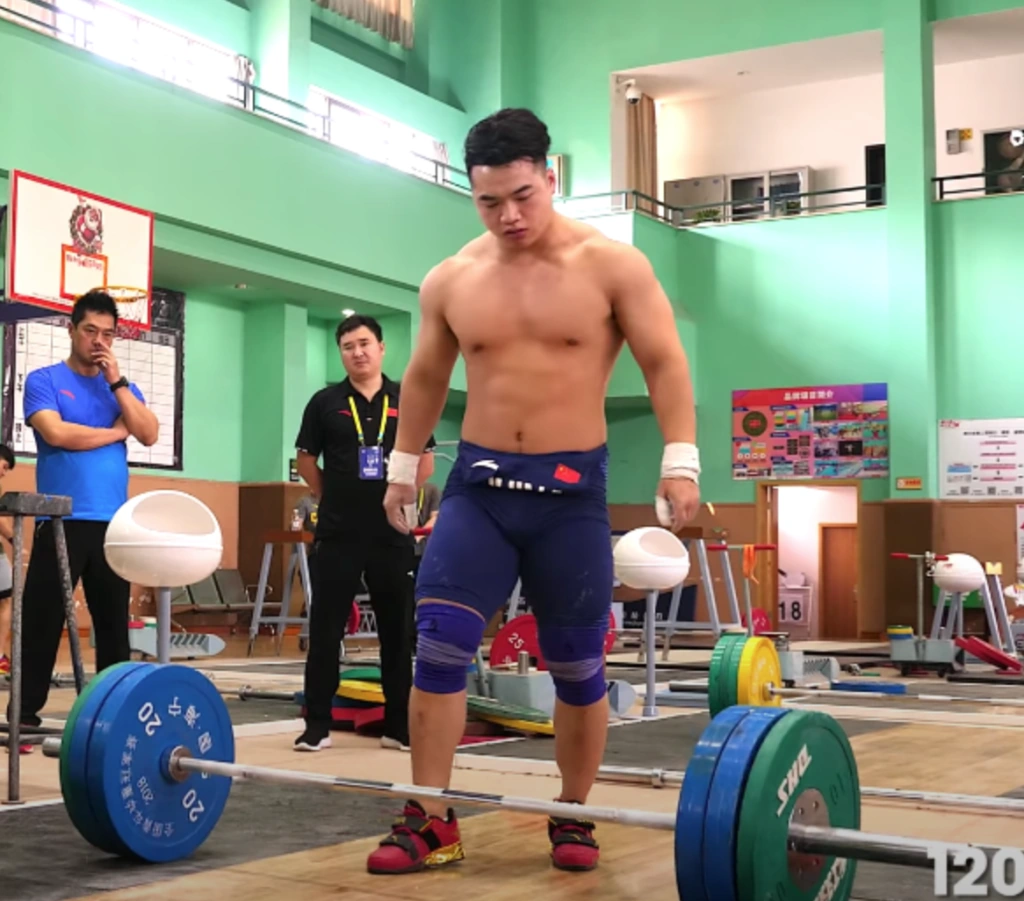
What does getting stronger mean?
Getting stronger means producing more force in a particular task. That could mean carrying a heavier shopping bag, bench pressing more weight or standing up from a low chair with greater control.
A strength result belongs to an exercise, an execution standard and a set of conditions. A strong squat does not automatically make someone equally good at pull-ups. Body weight, technique and experience matter differently across tasks.
| Term | Meaning | Example |
|---|---|---|
| Force | A push or pull | Pushing against a load |
| Torque | The turning effect of force around a joint | Extending the knee against resistance |
| Power | Work per unit of time; in a straight-line movement, force multiplied by velocity | Moving a load at high speed |
Maximum strength and explosive power are related but distinct training goals. A heavy, slow repetition can require considerable force without producing the greatest movement power.
Which factors contribute to muscle strength?
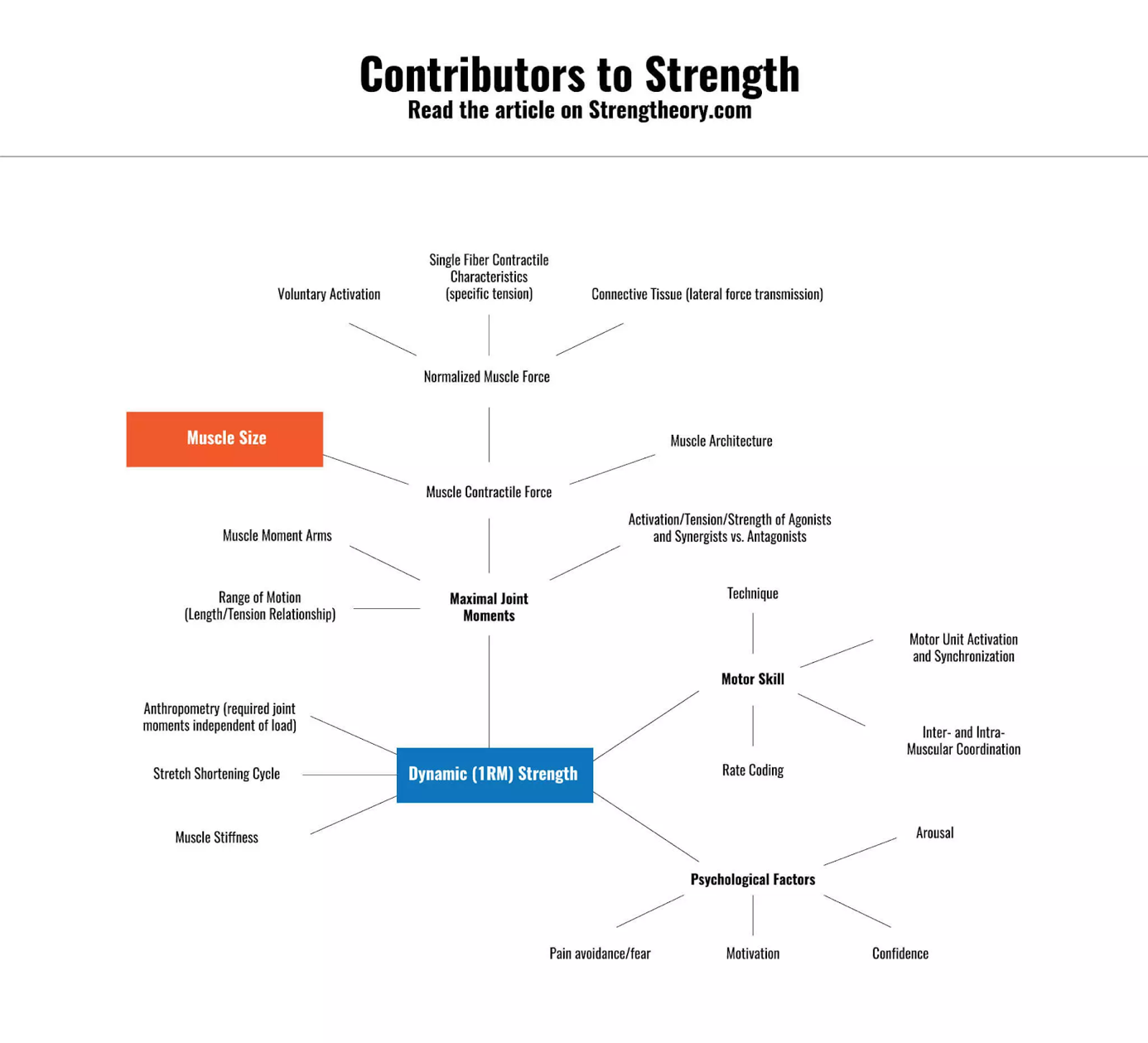
Muscle strength reflects muscle size and structure, anatomy, neural control and skill. Preparation and recovery also affect the performance you can express on a particular day.
The chart includes many underlying contributors. You do not need to measure every one to build a useful programme. Focus first on repeatable technique, sufficient challenge and a workload you can develop.
| Factor | Practical meaning |
|---|---|
| Muscle size and structure | Contractile tissue produces force; size is one contributor. |
| Nervous system and coordination | You need to activate the available muscles for the task. |
| Body proportions and moment arms | Anatomy and joint positions change the mechanical demands. |
| Technique and experience | You become more skilled at movements you practise. |
| Recovery and preparation | Fatigue, nutrition, sleep and concentration influence performance. |
More muscle helps, but does not predict everything
A larger muscle can contribute to greater force. Appearance alone does not reveal how much someone can lift in a particular exercise. Training experience, muscle architecture and activation also matter.
Knee-extension studies show that combinations of anatomical and neuromuscular characteristics can help explain performance. Findings depend on the task and sample. They are not a formula for predicting a maximum squat from a photograph. See Trezise et al. (2016) and Blazevich et al. (2009).
For an explanation of how muscle fibres grow, read our guide to muscle hypertrophy. This article focuses on expressing strength.
Why levers and moment arms matter
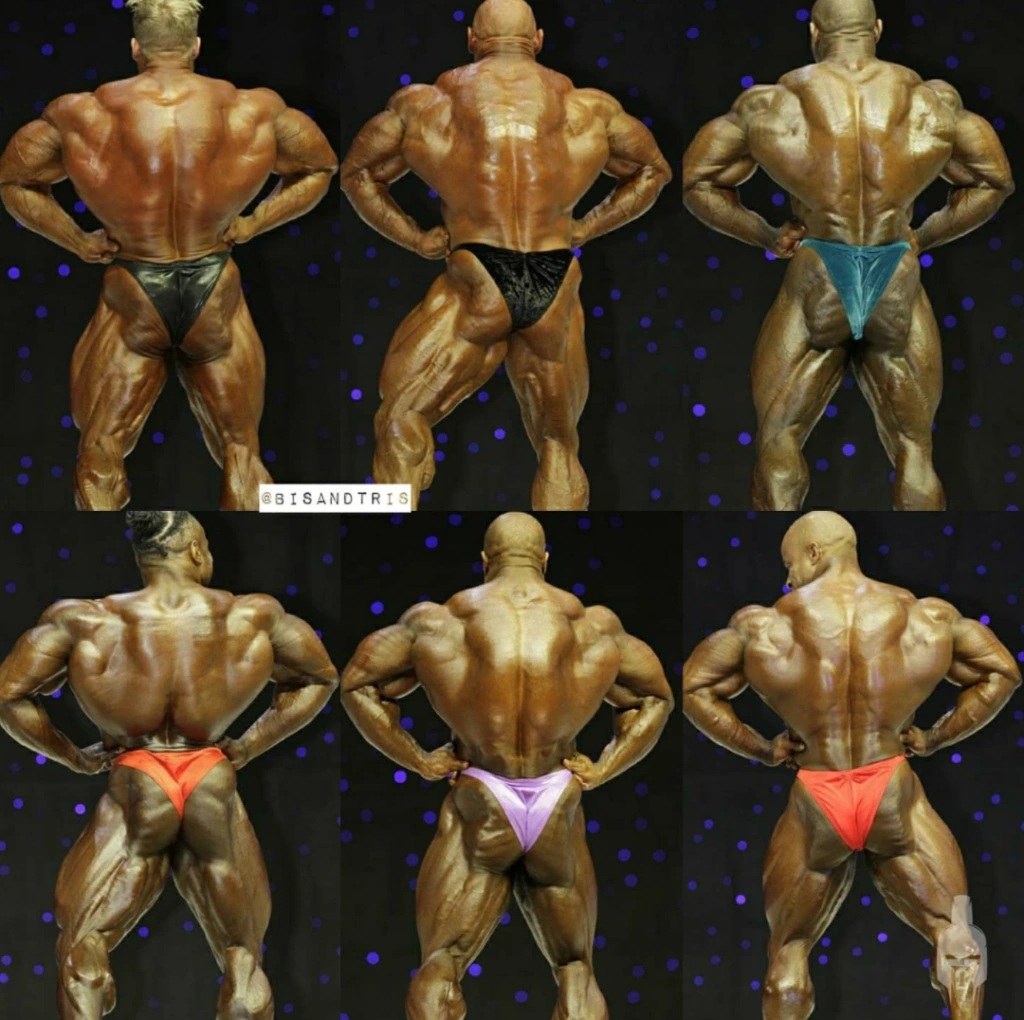
A muscle pulls on bones and creates torque around a joint. A moment arm is the perpendicular distance between the rotation axis and the line of action of a force. It is not simply the length of your forearm.
During a biceps curl, the load in your hand and the muscles around your elbow create opposing moments. Body proportions and arm position affect the muscle force required. The diagram illustrates that relationship.
Training does not change your bone lengths. You can choose an exercise, grip and range of motion that you can control. A longer or shorter lever is not equally advantageous in every task.
Muscles also differ in shape and position
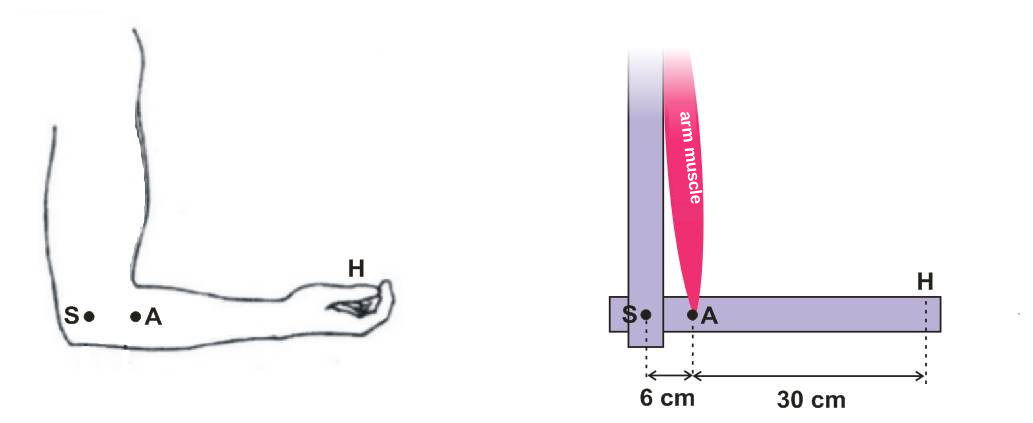
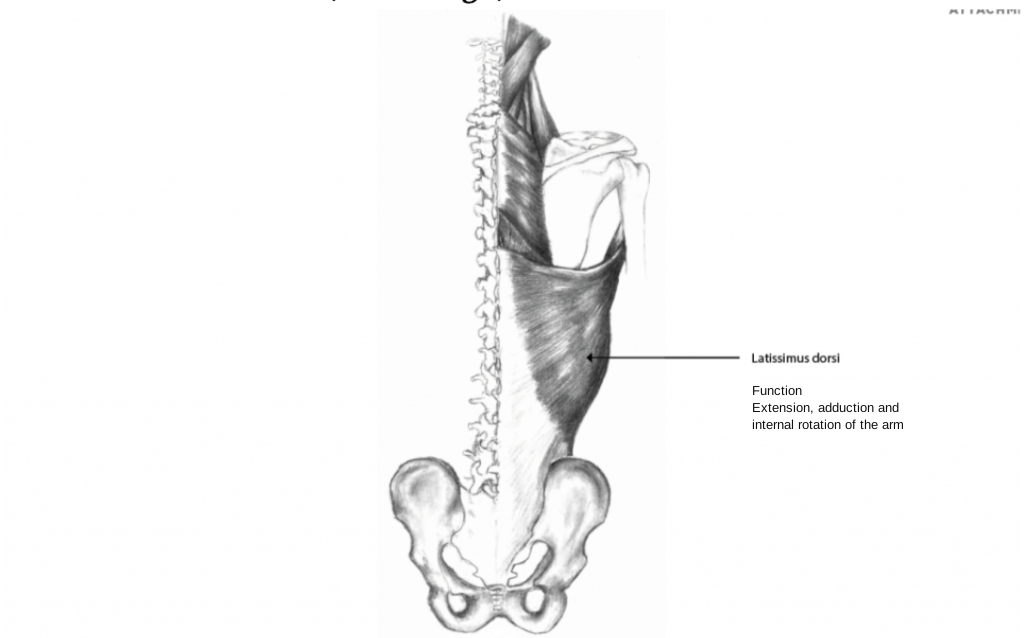
Muscles have particular architecture and connections with bone and connective tissue. The latissimus dorsi provides a visible example. It contributes to extension, adduction and internal rotation of the upper arm.
Anatomical differences help explain why the same position does not suit everybody. They do not allow a coach to determine someone’s exact attachment points or genetic talent from a photograph.
For a practical application, read squatting with long femurs. For neural control, read getting stronger without more muscle mass.
How to get stronger in practice
- Choose a specific task. Decide whether progress means a better squat, a pull-up or standing up more easily.
- Practise regularly. For many healthy adults, two strength-training days per week are a useful starting point. Include the major muscle groups across the week.
- Make repetitions comparable. Keep the exercise, range of motion and execution sufficiently consistent to compare performance.
- Build the challenge. Add repetitions or a small increase in load when you can maintain the intended execution.
- Plan recovery. Choose a workload you can repeat alongside your other activities.
- Record performance. Note the weight, repetitions and how challenging the sets felt.
This approach is consistent with the 2026 ACSM recommendations: participate regularly and match load and volume to the goal. Heavier loading becomes more relevant for a specific maximum-strength goal; beginners do not need to start by testing their maximum.
For details, read how to build a strength-training plan and how to use progressive overload.
Strength for everyday life
For many people, the main benefit is practical: lifting, carrying and standing up more easily. Training should therefore reflect the tasks that matter in your life or sport.
In older-adult research, lower grip strength and lower strength in certain leg tests are associated with less favourable health outcomes. These are associations: one test does not predict your lifespan or prove causation. See Sayer et al. (2006) and Newman et al. (2006).
Frequently asked questions
Can you get stronger without building much more muscle?
Yes. Skill, coordination and changes in neural activation can contribute to greater strength. Muscle growth may also contribute. Their relative roles vary with the person, exercise and training period.
How often should I train to get stronger?
Two weekly sessions can be a realistic starting point. The appropriate frequency depends on your goal, experience and schedule. Regular participation is more useful than an ambitious routine you cannot maintain.
How quickly will I notice strength gains?
It varies. A beginner may improve execution early on. Look at the trend across several sessions and keep testing conditions comparable.
Do I need to lift heavier in every workout?
No. Progress can also mean more controlled repetitions or better execution with the same load. Increase the challenge when it fits the programme and your performance.
Personal guidance in Eindhoven
Discuss your goals and experience with Roel and explore training that fits your week. Book your free intake.
Sources
- ACSM (2026): updated resistance-training recommendations
- Trezise et al. (2016): anatomy, activation and knee-extension torque
- Blazevich et al. (2009): anatomical predictors of knee-extension moment
- Sayer et al. (2006): grip strength and quality of life
- Newman et al. (2006): strength and health outcomes in older adults