Request your free trial lesson now!
Contact us today and schedule your free trial lesson!
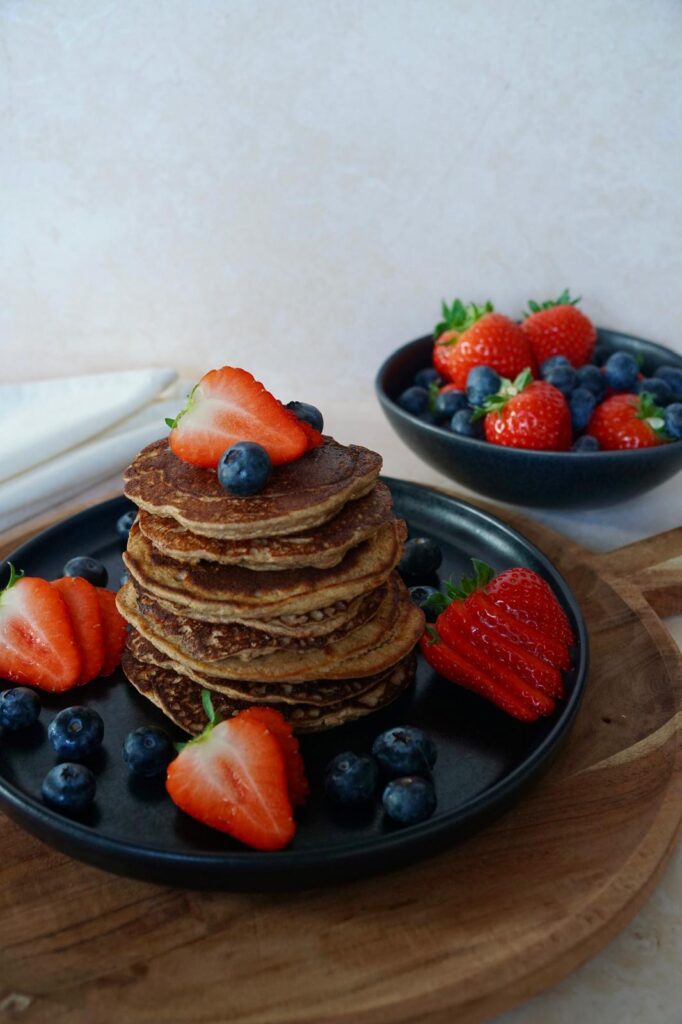
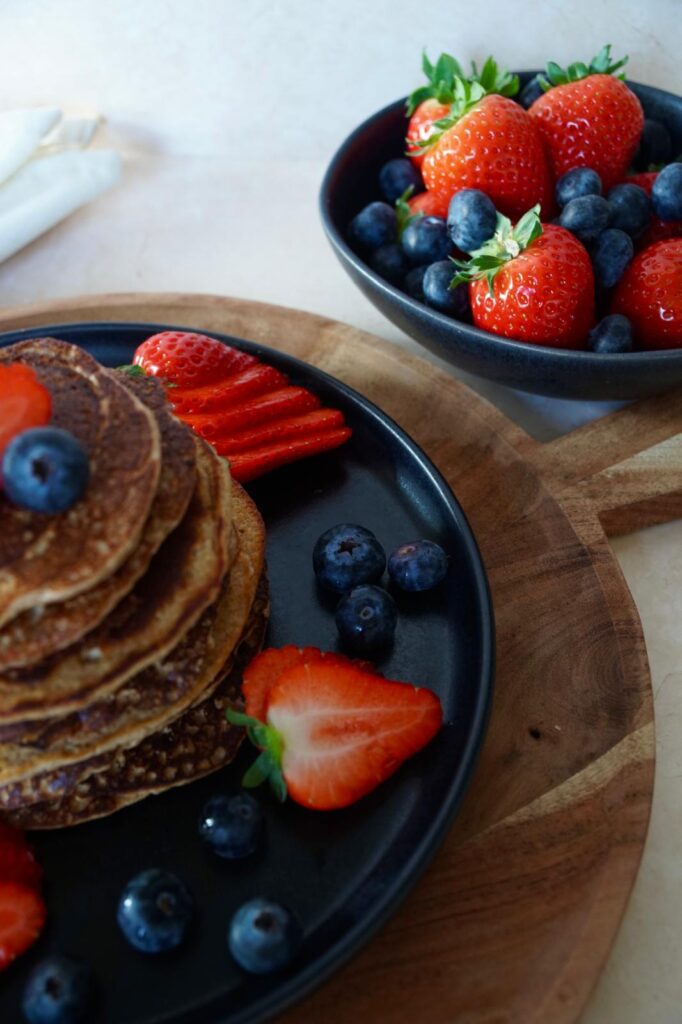
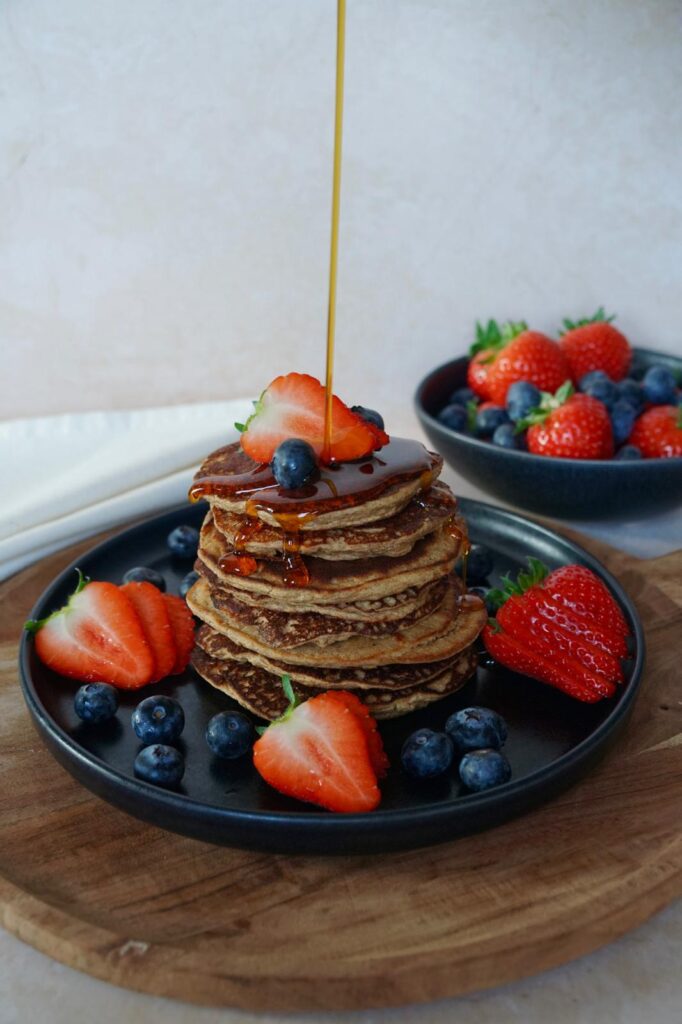
These protein pancakes combine oats, Greek yoghurt, protein powder and an egg. Blend the ingredients into a smooth batter, then cook small pancakes in a frying pan. Serve with blueberries, strawberries and a little maple syrup. The recipe serves 1–2 people and contains no banana.
Cinnamon and honey add flavour to the batter. You grind the oats yourself, so there is no need for a ready-made pancake mix.
Below, you will find the complete recipe, practical cooking tips and guidance on portions, nutritional values and storage.
| Detail | Information |
|---|---|
| Servings | 1–2 people |
| Main ingredients | Oats, Greek yoghurt, protein powder and egg |
| Equipment | Blender and frying pan |
| Cooking time | Approximately 2 minutes per side, depending on size and heat |
| Banana-free | Yes |
LET’S MAKE IT
The ingredient list quantities change. Notes and instructions describe the original batch.
Place the oats in a blender and blend into flour.
Add the Greek yoghurt, protein powder, egg, cinnamon, honey, baking powder and salt.
Blend until smooth. Scrape down the sides if necessary to incorporate all the ingredients.
Warm a little butter or coconut oil in a frying pan over a medium heat.
Spoon small portions of batter into the pan. Cook for approximately 2 minutes per side, until golden and cooked through. Reduce the heat if the outside darkens too quickly.
Add blueberries, strawberries and a little maple syrup.
This batter differs from a thin, traditional pancake batter. Small pancakes are easier to turn and cook evenly.
Leave enough space between them to slide a spatula underneath comfortably.
Avoid moving a pancake immediately after adding the batter to the pan. Give the underside time to firm up first.
If it tears when you turn it, wait a little longer with the next one and consider using a smaller portion of batter.
A dark exterior does not automatically mean the centre is cooked. Reduce the heat if the pancakes brown too quickly.
The suggested 2 minutes per side is a guide. Batter thickness, pancake size and your pan affect the time required.
Extra powder changes the balance between dry and wet ingredients. This can thicken the batter and make the pancakes drier.
Start with the 30 g in the recipe. Another scoop is not necessarily an improvement.
Greek yoghurt varies between brands in thickness and composition. Different protein powders also absorb different amounts of moisture.
Using the same products each time makes the result more predictable.
The batter can be thicker than traditional pancake batter. If it is barely possible to spoon it out of the blender, first check that you have weighed the ingredients correctly. Adding liquid would be an adjustment to the original recipe.
The yoghurt, protein powder and egg provide protein. The oats contribute some too.
A reliable nutritional calculation requires your product labels and portion sizes. These choices make a difference:
30 g of protein powder does not necessarily provide 30 g of protein. Check the label to see how much protein your product supplies per 30 g.
Calculate the nutritional values for the whole recipe, including cooking fat and toppings. Divide by two if you make two equal portions.
Read more about macronutrients: protein, carbohydrates and fats.
They can fit into a varied eating pattern. Oats, yoghurt, eggs and fruit provide different nutrients. Your portion size and the rest of your diet still matter.
A recipe containing protein powder is not automatically better than every breakfast without it. Choose a breakfast you enjoy, that suits your needs and is practical for your morning.
They can be, provided the amount fits your overall energy intake.
High in protein does not automatically mean low in calories. The yoghurt’s fat content, cooking fat and toppings all affect the energy content.
No. The batter contains honey, and the toppings can include maple syrup. The protein powder may also contain sugar or sweeteners, depending on the product.
That does not automatically make the recipe unsuitable. It does mean that it should not be described as sugar-free or free from added sugar.
Yes. They combine protein from yoghurt, protein powder and egg with carbohydrates from oats and toppings.
You do not need to reserve them for after a workout. They can also be breakfast or lunch on another day.
Muscle growth depends on your training, overall nutrition and recovery. One meal does not automatically provide everything your body needs.
Read our guide to nutrition and muscle growth for the broader picture.
You can cook these pancakes in advance for another meal.
The Netherlands Nutrition Centre gives a refrigerated storage time of two days for pancakes. Follow a shorter remaining storage time if any ingredient requires it. [1]
The original recipe above remains unchanged. If you substitute an ingredient, consider how it affects flavour, texture and nutritional values.
Using plant-based yoghurt alone does not automatically make the recipe lactose-free. Check the protein powder and butter too.
A plant-based yoghurt alternative may contain less protein and cook differently from Greek yoghurt. Lactose-free is not the same as suitable for someone with a cow’s milk allergy.
Use oats labelled gluten-free and check the protein powder, baking powder and other ingredients. Ordinary oats are not automatically suitable for a gluten-free diet because of possible contamination with gluten. [2]
Quark or nut butter can be additional toppings. They change the nutritional values, and nut butter introduces a potential allergen.
Yes. This recipe uses Greek yoghurt and an egg and contains no banana.
Yes. For this recipe, blend 40 g oats into flour before adding the remaining ingredients.
Both are options in the original recipe. Vanilla adds more flavour to the batter, while unflavoured powder lets the cinnamon and toppings stand out.
That is a possible variation, but it changes the thickness and composition. The recipe above uses 180 g Greek yoghurt. Substituting quark does not guarantee the same cooking result.
They may be too large or being turned too early. Use small portions and allow the underside to firm up first. Also check that all ingredients were added in the correct quantities.
That changes the recipe. The powder contributes to the texture and nutritional values. Simply leaving it out will not necessarily produce the same result.
That depends on their size. The original recipe serves 1–2 people and does not specify a fixed number of pancakes.
The recipe contains milk and egg. Depending on the products, gluten, soya or other allergens may also be present. Check the protein powder and topping labels too.
Do you want to alternate? See also:
At Aurora Personal Training in Eindhoven, we consider how training, nutrition and recovery fit into your daily life.
Breakfast does not need to be complicated. A few recipes you enjoy and can adapt to your needs often provide more practical structure than continually searching for the perfect meal.
Would you like to discuss how your nutrition and training work together? Book a free intake at Aurora Personal Training.
These sources are in Dutch.
Roel van den Bogaard is personal trainer and founder of Aurora Personal Training, specializing in strength training, mobility and sustainable vitality. With years of experience, he helps entrepreneurs, professionals and expats to be fitter, stronger and more energetic in life. Roel combines scientifically based training methods with personal coaching and a high-end gym experience, fully tailored to your goals and lifestyle.
Contact us today and schedule your free trial lesson!

